On the move since 1914
At home in the region – connected to the world
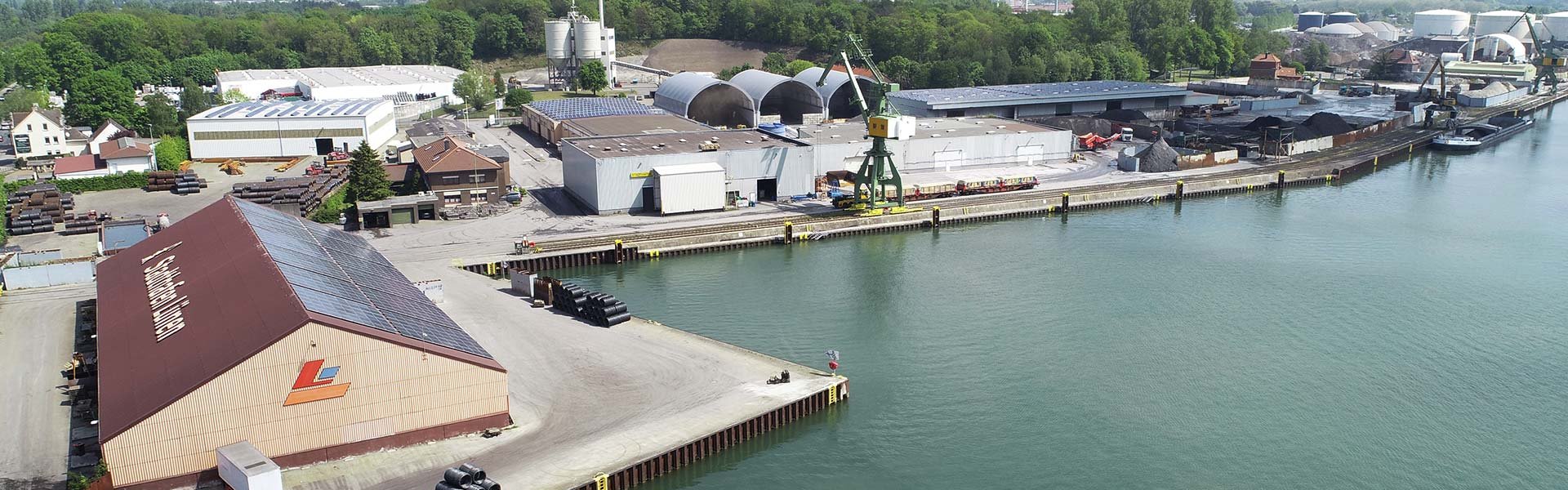
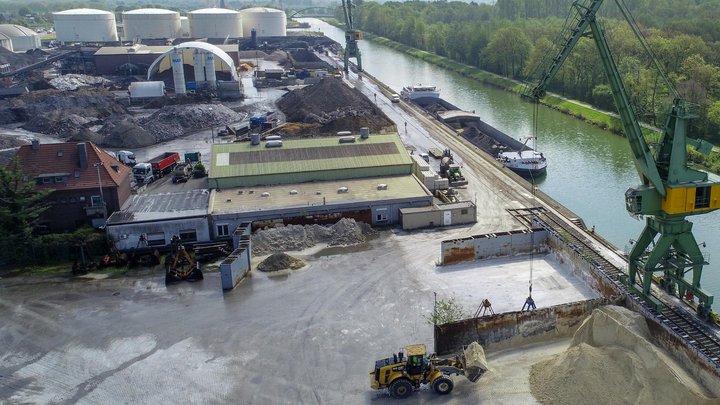
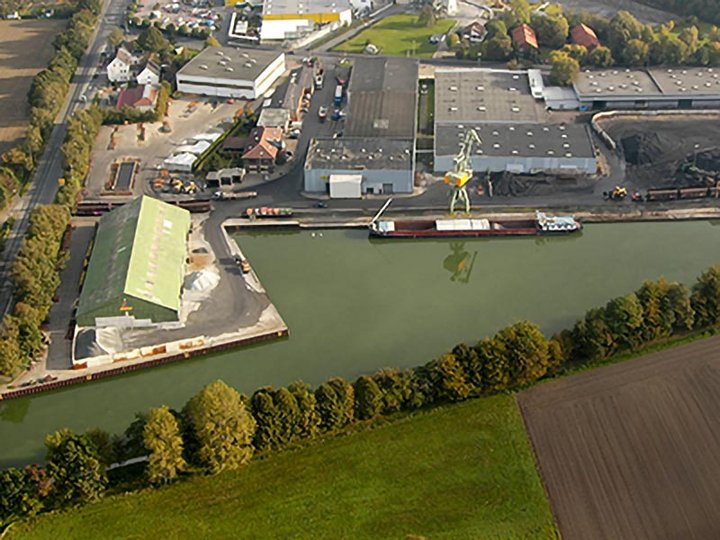
Lünen City Port connects the regional economy with supra-regional flows of goods – by water, rail and road. We have been developing the site for over 100 years. Today, we combine experience and high-performance infrastructure with flexible solutions and new ideas for safe and sustainable logistics.
Stadthafen Lünen at a glance
-
Partner to the regional economy
A key logistics hub for industry and trade in the Lünen area
-
Trimodal connections
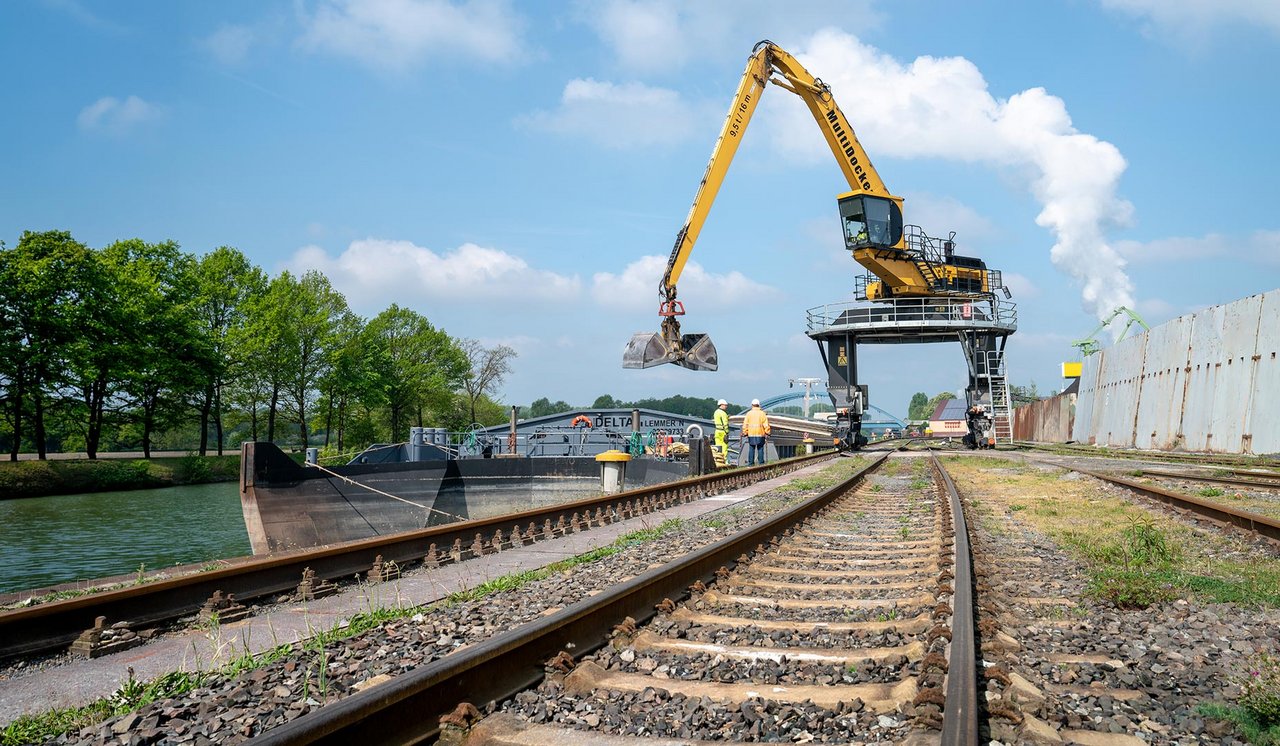
Direct transhipment between ship, rail and lorry at a single location
-
Connected to the world
Via the major seaports in the Netherlands and Belgium, goods from the region reach international markets – and vice versa
-
Flexible and solution-oriented
Expertise and experience provide scope for meeting specific requirements
-
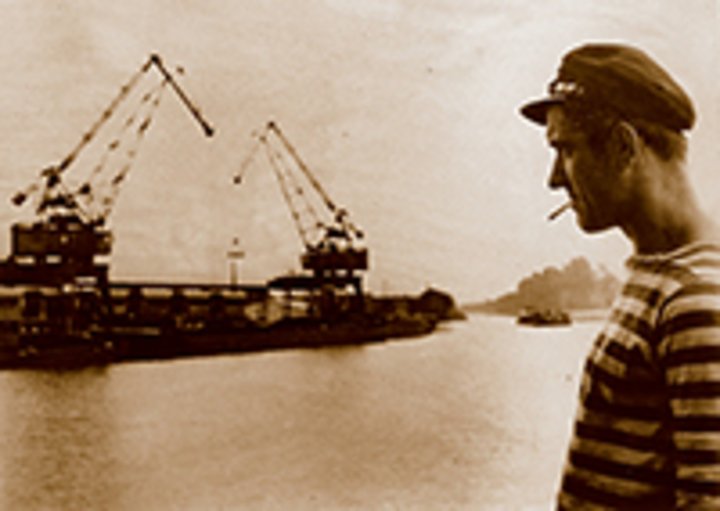
Undergoing change since 1914
From a coal transhipment centre to a modern logistics hub
-
Relief for the roads and the climate
Shipping and rail take the pressure off the roads and enable transport with lower CO2 emissions
For a strong region
A hub for the regional economy
Lünen City Port is a key part of the regional logistics infrastructure. Companies from the industrial and commercial sectors use the site to receive, handle, temporarily store and onward transport raw materials and goods. The port acts as the interface between the region and wider transport networks. Companies within a radius of around 45 minutes’ drive by lorry benefit from this.
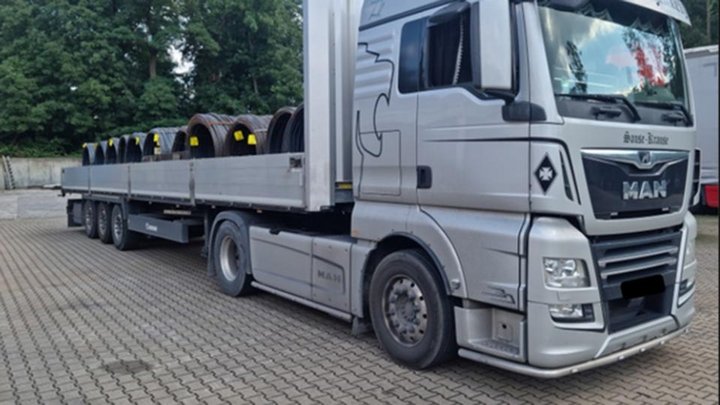
The interplay between the different modes of transport is crucial: large volumes of goods can be transported over long distances by ship or rail. For pre- and post-carriage, lorries handle the shorter local journeys. This creates flexible transport options whilst helping to relieve pressure on the roads.
As such, the city port is not only a transhipment centre but also a key supply hub and economic hub for Lünen and the wider region.
Environment and sustainability
Reducing emissions, strengthening circular economies
Around 40,000 fewer lorries on the roads: this is the extent to which transport by ship and rail via the Lünen City Port relieves the burden on the transport infrastructure every year. If lined up end to end, these lorries would stretch from Lünen to Munich.
There is also a significant difference in CO₂ emissions: a lorry emits around 106 grams of CO₂ per tonne-kilometre, whilst a ship emits around 43 grams – around 60 per cent less. In 2025 alone, around 560,000 tonnes of goods were transported by ship via Lünen City Port.*
The circular economy also plays a major role at the port. Since 1994, it has developed into a recycling hub. Today, we are authorised to handle more than 214 different types of waste in accordance with the European Waste Catalogue – from handling and storage to processing, recovery and disposal.
Innovation and safety
Ideas that improve the port
Good solutions often arise where they are needed: right in the day-to-day workplace. At Lünen City Port, we take a close look at things, scrutinise existing processes and develop our own ideas to make work safer or easier. Several award-winning projects demonstrate that this can lead to solutions that set an example for others to follow.





You can rely on us. And we can prove it.
Health and safety and quality assurance are not merely a chore for us. We attach the utmost importance to the safety of everyone who works at and for Lünen City Port. The storage and transport of our customers’ goods are subject to a strictly defined quality management system.
-
NLF/ILO-OSH 2001 ‘Sicher mit System’ quality mark awarded by the employers’ liability insurance association
View/download document -
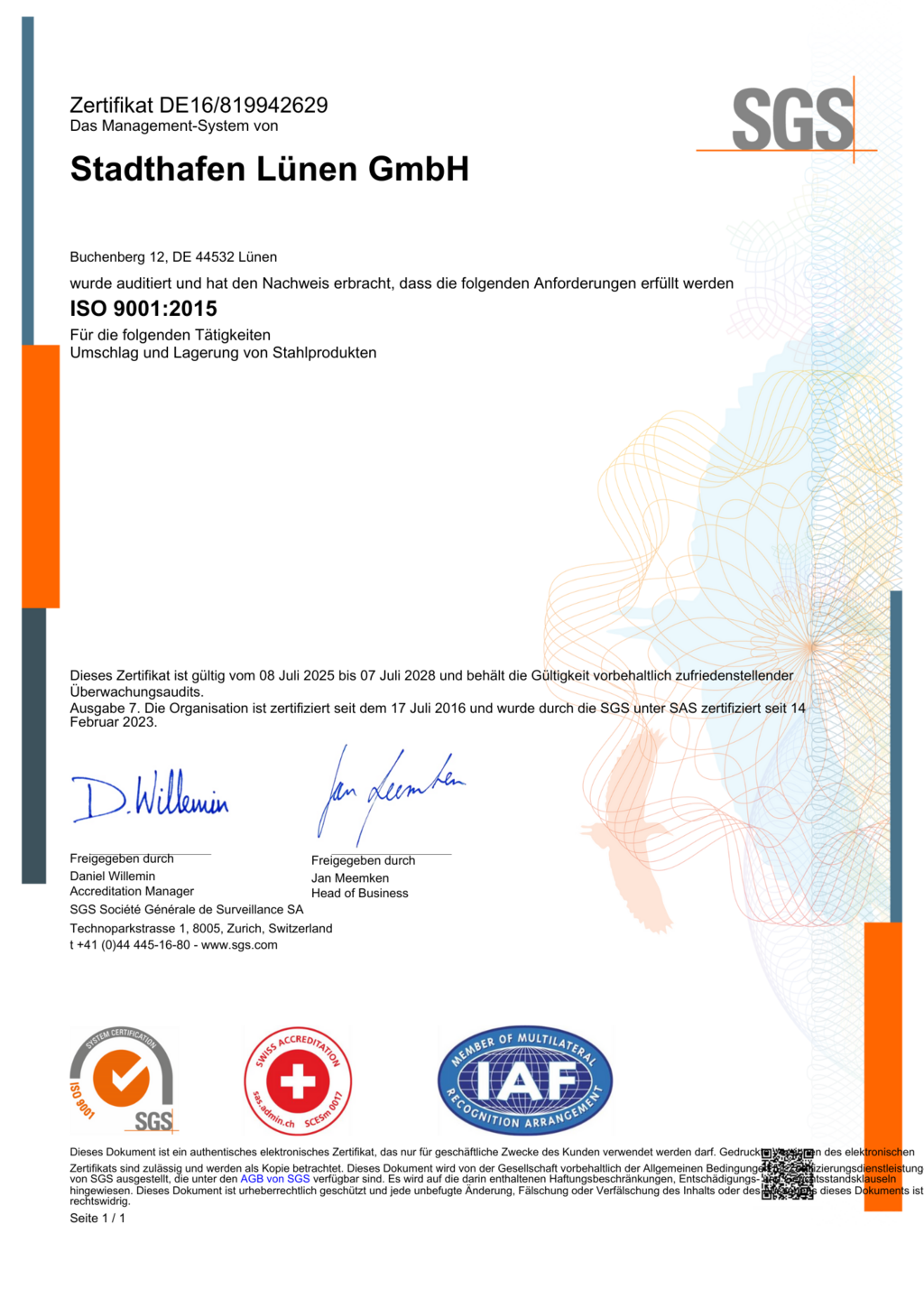
ISO 9001:2015 quality management certificate for the handling and storage of steel products
View/download document -
-
GMP+ certificate for the storage and handling of animal feed
View/download document -
* The figures are based on data from 2025, when the transport of 560,000 tonnes by ship resulted in a saving of 35,280 tonnes of CO₂ per kilometre travelled. For a ship carrying 1,000 tonnes of cargo, this corresponds to a saving of 63 kg per tonne-kilometre. The figures given are averages.
Calculation basis: lorry: 106 g/tonne-kilometre – ship: 43 g/tonne-kilometre = difference: 63 g/tonne-kilometre.